

Blog
What You Didn’t Know About Tea Grades


Have You Ever Wondered About Tea Grades? Let’s Unravel the Mystery in Your Teacup
There’s something quietly magical about a good cup of tea. The way the steam curls in the air, the first sip that warms you from the inside out – it’s a ritual, a comfort, and for many, a daily necessity. But have you ever wondered what lies behind the leaves in your teacup? Why do some brews whisper with delicate floral notes while others hit the tongue with bold, malty richness?
If you’ve ever found yourself standing in the tea aisle, befuddled by words like Orange Pekoe or CTC, you’re in good company. Tea, you see, has its own secret language – and once you learn to speak it, your entire tea experience transforms.
Let’s explore the world of tea grades together – the hows and whys of their classification, the subtle differences between each type, and how to choose the one that suits your taste, mood, and moment.
The Many Faces of Tea
First, a small but crucial truth: all authentic tea, be it white, green, oolong, black, or pu-erh, comes from the same plant: Camellia sinensis. It’s how the leaves are processed after harvesting that gives each tea its unique character.
-
White tea is the most delicate of the lot. Harvested while the leaves are still young and covered in fine silvery fuzz, it undergoes minimal processing. The result is a whisper-light brew with a subtle sweetness.
-
Green tea is quickly steamed or pan-fired to prevent oxidation, retaining its verdant colour and grassy, slightly astringent flavour.
-
Oolong tea walks the line between green and black. Semi-oxidised, it offers complex flavours – from floral to roasted – depending on how it’s made.
-
Black tea is fully oxidised, giving it its rich, bold character and often a malty or fruity depth.
-
Pu-erh, aged and fermented, is earthy, deep, and prized for its health benefits.
Understanding Tea Grades: What They Mean and Why They Matter
Now, on to tea grades – because even within each type, not all tea leaves are created equal. Tea grading doesn’t measure flavour or freshness, but rather the size, shape, and condition of the leaves.
Here’s where it gets a little technical, but don’t worry – I’ll guide you through it like an old friend sharing secrets over a cuppa.
Whole Leaf, Broken Leaf, and the Rest
-
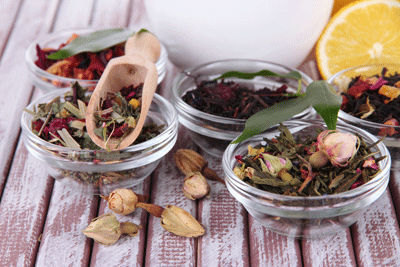
Whole leaf teas are the crème de la crème. The leaves are unbroken, carefully rolled, and dried with reverence. They steep slowly, releasing nuanced flavours that unfurl over time. Think of them as the fine wines of the tea world.
-
Broken leaf teas come from whole leaves that have been – intentionally or not – broken into smaller pieces. They steep faster and offer a stronger flavour, often used in blends and everyday brews.
-
Fannings and dust are the smallest particles, usually what you’ll find in commercial teabags. They infuse quickly but lack the complexity of higher-grade teas.
Orthodox vs. CTC
The method of processing also affects the tea grades:
-
Orthodox tea is hand- or machine-rolled with great care to preserve the leaf’s integrity. It’s labour-intensive and yields elegant, layered brews.
-
CTC (Crush, Tear, Curl) teas are mass-produced – the leaves are shredded into small pellets, making for a quick, strong brew. Common in breakfast blends, these teas are practical but rarely subtle.
And then there are those puzzling terms like Orange Pekoe (OP), which sounds like a flavour but is actually a grade referring to the size and appearance of the leaf. For instance:
-
OP – long, thin whole leaves
-
BOP (Broken Orange Pekoe) – smaller, broken leaves
-
FOP (Flowery Orange Pekoe) – leaves with tender buds, more refined
-
TGFOP (Tippy Golden Flowery Orange Pekoe) – a mouthful, yes, but also a sign of superior quality with a high ratio of golden tips
The more letters, the higher the grade, generally speaking.

How to Choose the Right Tea for You
Think about what you want from your tea. A moment of calm? A jolt of energy? A flavourful companion to your afternoon biscuit?
-
If you enjoy subtlety and have time to savour, opt for whole leaf teas – particularly oolong or high-grade green.
-
For a hearty morning brew, CTC or broken black teas make a bold statement, especially with a dash of milk.
-
Fancy a treat? Look for teas with golden tips or “flowery” grades for a touch of luxury.
The trick is to experiment. Sample. Sip. Trust your palate.
Brewing the Perfect Cup
Even the finest leaves need a little care. Use fresh, filtered water – never reboiled. Pay attention to temperature:
-
White and green teas prefer cooler water (around 70–80°C).
-
Oolong sits happily at 80–90°C.
-
Black and pu-erh want a full, rolling boil.
Steeping time matters too. Too long, and even the gentlest tea turns bitter. A few minutes is usually just right – and always, always follow your nose and taste.
The Final Sip
Tea isn’t just a drink – it’s a moment, a mood, a memory. Understanding tea grades deepens that experience. It turns a simple brew into a story, told in fragrance, flavour, and feeling.
So the next time you hold a warm mug in your hands, take a moment to wonder where those leaves have been, how they were shaped, and what secrets they carry.
Because every cup tells a tale – and now, you know how to listen.